How to Choose the Right Marketing Tactics Based on Your Goals
You’ve defined your marketing goals—now what? The next step is turning those goals into action. But with hundreds of tactics out there (from SEO to social ads to podcasts), how do you know where to focus? In this post, I’ll walk you through how to choose the right marketing tactics—based on your business goals—so you can stop guessing and start growing.
Step 1: Let Your Goals Lead the Way
The number one mistake most marketers make? Picking tactics first and hoping they work. It’s like grabbing random tools from a toolbox without knowing what you’re trying to build.
Instead, ask:
What’s the primary outcome I want from my marketing?
Match your goal to the tactic that best supports it. Here’s a cheat sheet:
| If your goal is to… | Consider these tactics: |
|---|---|
| Build brand awareness | Organic social, SEO, podcasting, influencer outreach |
| Generate leads | Lead magnets, webinars, PPC, landing pages |
| Nurture relationships | Email marketing, content series, retargeting ads |
| Drive sales | Conversion-focused landing pages, promo emails, product retargeting |
| Improve customer retention | SMS marketing, loyalty programs, email automation |
Step 2: Understand the Strength of Each Channel
Not all channels are created equal. Here’s a quick overview:
1. SEO (Search Engine Optimization)
Best for: Long-term lead generation, building trust
Pros: Evergreen, cost-effective over time
Cons: Takes time to rank and see ROI
2. PPC (Pay-Per-Click Advertising)
Best for: Fast traffic, short-term promotions
Pros: Quick results, highly targeted
Cons: Can be expensive if not optimized
3. Email Marketing
Best for: Relationship building and conversions
Pros: Owned channel, high ROI
Cons: Requires list growth + content consistency
4. Social Media Marketing
Best for: Brand visibility and engagement
Pros: Broad reach, real-time interaction
Cons: Algorithm-dependent, can be time-consuming
5. Content Marketing (Blogs, Video, etc.)
Best for: SEO, authority building, education
Pros: Helps with trust and search
Cons: Requires time and planning
Step 3: Filter by Budget, Timeline, and Skills
Let’s get practical. Even the best tactic won’t work if it’s out of reach for your budget or bandwidth.
Ask yourself:
- How quickly do I need results? (PPC = fast. SEO = slow but lasting.)
- What’s my budget? (Organic tactics cost time, not money.)
- What can I execute well? (If you hate video, don’t force TikTok.)
- Do I have the tools or tech needed? (Landing pages? Email platform?)
Step 4: Don’t Overcommit—Pick 1–3 Tactics to Start
It’s better to do one or two tactics well than to do ten poorly. Once you’ve chosen tactics aligned with your goals, go deep. Test, tweak, and optimize.
Here’s a simple selection framework:
| Marketing Stage | Primary Goal | Recommended Tactic(s) |
|---|---|---|
| Just Starting Out | Visibility | SEO blog, Instagram Reels, partnerships |
| Gaining Traction | Lead Generation | Downloadable guide + email follow-up |
| Ready to Scale | Conversions + ROI | Retargeting ads + sales funnel automation |
Step 5: Track What Works (and Stop What Doesn’t)
Every tactic should be tied to a measurable outcome. Track:
- Leads generated per channel
- Sales per campaign
- Engagement rate
- Cost per lead/sale
Use tools like:
- Google Analytics
- HubSpot
- Meta Ads Manager
- UTM tracking + simple spreadsheets
If a tactic isn’t performing after a solid effort—pivot.
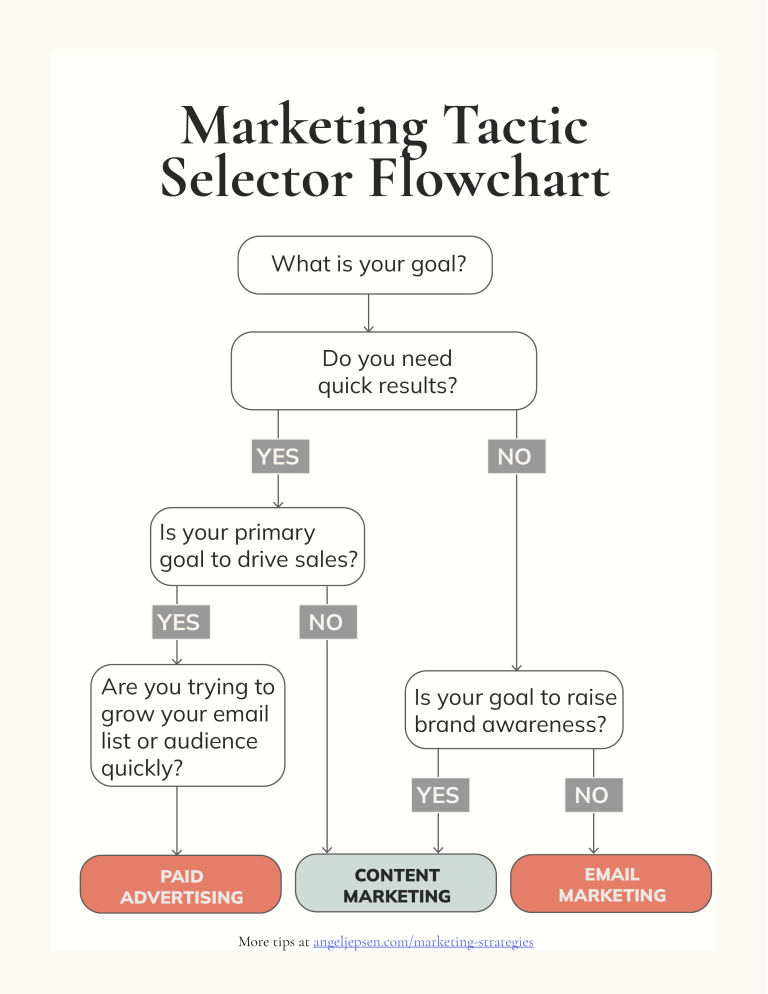
Bonus: Download the Tactic Selector Flowchart
Still not sure what to pick? Get my free Tactic Selector Flowchart to match your goal to the best channel for your business.
Final Thoughts
Choosing marketing tactics isn’t about copying what others are doing—it’s about aligning your actions with your specific goals, audience, and resources. The right tactic will feel strategic, focused, and measurable.
When in doubt, ask:
Will this move me closer to my goal this quarter?
If not—it’s just noise.